
In today’s digital age, over 4.9 billion people are active across platforms like Instagram, Facebook, LinkedIn, and TikTok. If you want to connect with customers where they spend their free time, Social Media Marketing (SMM) is no longer optional—it is essential.
❓ What Is Social Media Marketing?
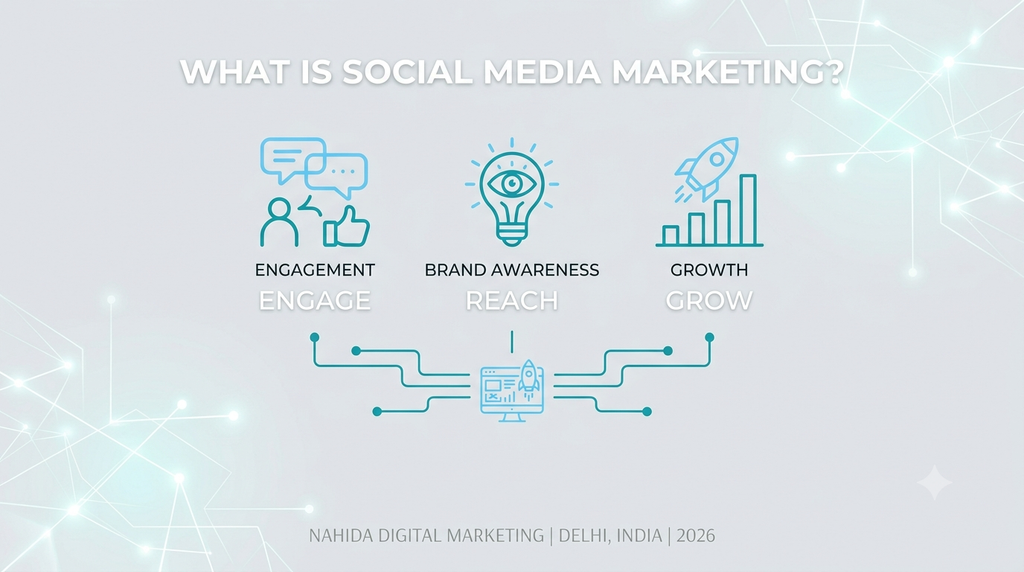
Social Media Marketing (SMM) is the practice of creating and sharing content on social media platforms to build your brand, engage with your target audience, increase sales, and drive website traffic.
It involves a mix of organic activities (posting text, photos, reels, and stories) and paid advertising (running targeted ad campaigns).
The main goal of social media marketing is not simply to gain followers or likes. It is about creating meaningful connections with your audience and turning those interactions into brand awareness, website visits, leads, and sales.
🌐 Popular Social Media Platforms for Marketing
Different social media platforms attract different types of audiences. Choosing the right platform depends on your business, goals, and target audience.
- Instagram: Great for visual content, Reels, Stories, product promotion, and building brand identity.
- Facebook: Useful for reaching a wide audience, community building, content sharing, and paid advertising.
- LinkedIn: Ideal for B2B marketing, professional networking, and sharing industry-related content.
- TikTok: Popular for short-form videos, creative content, trends, and reaching younger audiences.
You do not need to use every platform. Focus on the platforms where your target audience is most active.
🎯 The Core Pillars of Social Media Marketing
To build an effective social media strategy, focus on these five main pillars:
┌───────────────────────────────────────────────────┐
│              THE 5 PILLARS OF SMM                 │
└─────────────────────────┬─────────────────────────┘
  ├── 1. Strategy (Goals & Audience)
  ├── 2. Content (Create & Publish)
  ├── 3. Engagement (Listen & Respond)
  ├── 4. Analytics (Track & Optimize)
└── 5. Ads (Paid Targeted Reach)- Strategy 🎯: Define your target audience and choose the right platforms for your business goals.
- Planning & Publishing 🗓️: Consistently deliver high-quality posts, graphics, and videos tailored to each platform.
- Listening & Engagement 💬: Respond to comments, messages, and mentions to foster a loyal online community.
- Analytics & Reporting 📊: Track performance metrics like engagement rates, clicks, and conversions.
- Paid Social Advertising 💰: Boost top-performing posts or run dedicated social media advertising campaigns to reach target demographics quickly.
📱 Types of Social Media Marketing
Social Media Marketing can be done in several ways depending on your business goals.
- Organic Social Media Marketing: Creating and sharing content without directly paying for reach, such as posts, Reels, Stories, and educational content.
- Paid Social Media Advertising: Running targeted ads to reach specific audiences based on factors such as interests, demographics, and online behavior.
- Influencer Marketing: Collaborating with relevant creators or influencers to introduce your brand to their audience.
- Content Marketing: Sharing useful, entertaining, or educational content that helps attract and retain your audience.
- Community Marketing: Building an active community through comments, groups, discussions, and direct interactions.
A successful strategy can combine several of these methods instead of depending on only one.
🚀 Top Benefits for Your Business
- Increased Brand Awareness 🌐: Get noticed by thousands of potential customers without a massive advertising budget.
- Higher Conversion Rates 🛍️: Direct interaction builds trust, making followers far more likely to buy.
- Direct Customer Insights 👥: Discover what your audience loves or needs by reviewing comments and feedback.
- Cost-Effective Marketing 💵: Setting up profiles is free, and paid campaigns offer flexible budgets suitable for any business.
- Increased Website Traffic 🔗: Social media content can encourage people to visit your website, blog, landing page, or online store.
- Better Customer Relationships 🤝: Regular communication helps businesses build stronger relationships with existing and potential customers.
⚙️ How Does Social Media Marketing Work?
A simple social media marketing strategy usually follows these steps:
1. Set Your Goals 🎯
Decide what you want to achieve—such as increasing brand awareness, generating leads, driving website traffic, or increasing sales.
2. Understand Your Audience 👥
Identify who your ideal customers are, what they need, what type of content they prefer, and which platforms they use.
3. Create Valuable Content 💡
Create posts, videos, Reels, Stories, graphics, or other content that provides value to your audience.
4. Publish Consistently 🗓️
Use a content calendar to plan and maintain a consistent posting schedule.
5. Engage With Your Audience 💬
Reply to comments and messages and encourage conversations instead of simply publishing content and leaving.
6. Analyze Your Results 📊
Check your performance and identify which content gets the most engagement, clicks, leads, or conversions.
7. Improve Your Strategy 🔄
Use your results to understand what works and make your future content more effective.
📊 How to Measure Social Media Marketing Success
Getting likes and followers can be useful, but they are not the only signs of success. Businesses should track different social media metrics based on their goals.
Some important metrics include:
- Engagement Rate: Shows how actively people interact with your content.
- Reach: Measures how many people saw your content.
- Impressions: Shows how many times your content was displayed.
- Website Clicks: Measures traffic sent from social media to your website.
- Leads: Shows how many potential customers came through your campaigns.
- Conversions: Measures actions such as purchases, registrations, or sign-ups.
The right metrics depend on what you are trying to achieve with your social media strategy.
⚠️ Common Social Media Marketing Mistakes
Many beginners make simple mistakes that can reduce the effectiveness of their social media efforts.
- Posting without having a clear strategy
- Trying to be active on every social media platform
- Focusing only on followers and likes
- Posting promotional content all the time
- Ignoring comments and messages
- Using the same content without adapting it to each platform
- Not checking analytics and performance
- Giving up because results do not come immediately
Social media marketing takes time. Consistency, testing, learning, and improvement are important for long-term results.
💡 4 Quick Tips to Get Started Today
- Focus on Quality Over Quantity: It is better to excel on one or two platforms where your target audience hangs out.
- Hook Viewers Fast: Use eye-catching visuals and short-form video formats (like Reels or Shorts) to stop scrollers.
- Maintain Consistency: Use a content calendar to keep a steady posting schedule.
- Include a Clear Call-to-Action (CTA): Tell your audience what to do next—whether it’s “Click the link in bio” or “Shop now”.
📌 Final Thought
Social media marketing isn’t just about collecting likes—it’s about building genuine relationships. Keep your content valuable, stay consistent, and adapt your approach as platform trends evolve!
Whether you are a small business, freelancer, creator, or growing brand, having a clear social media strategy can help you connect with the right audience and build a stronger online presence.